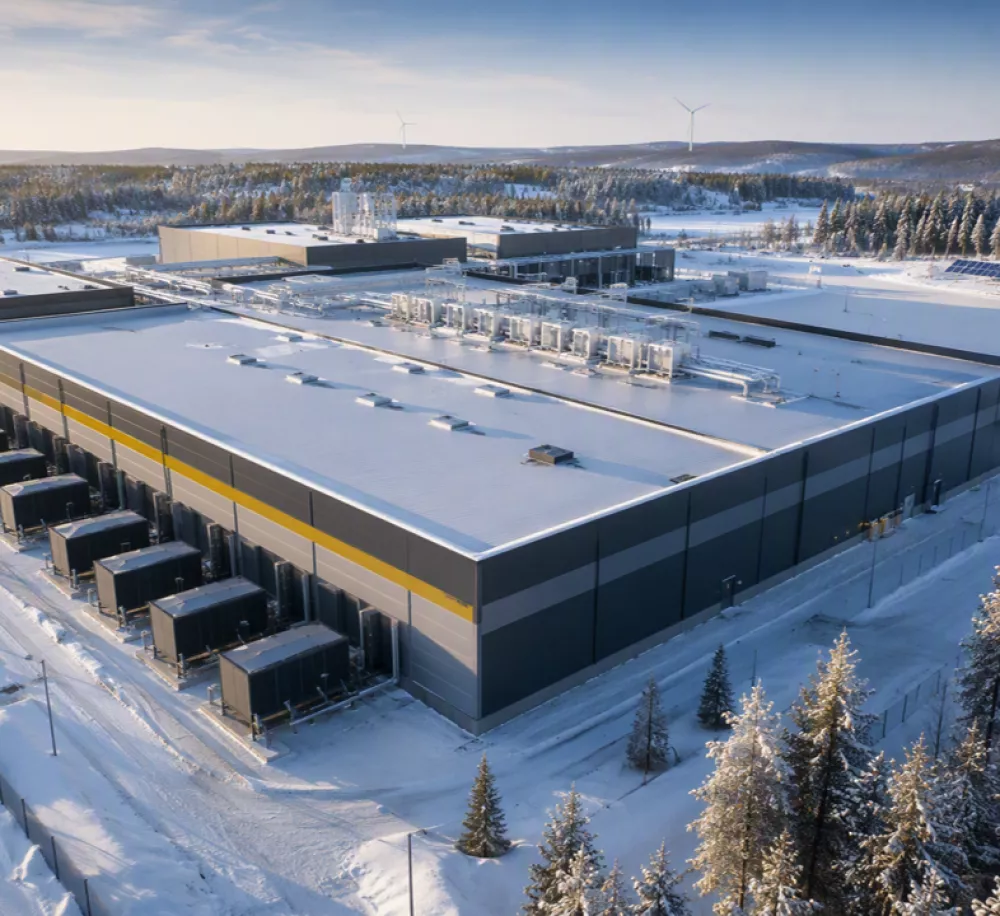
Artificial intelligence, cloud computing and digital services continue to drive investment in data centres across Europe. The Nordic region has become a key destination for these projects, attracting global developers with its reliable energy infrastructure, cool climate and strong technical expertise.
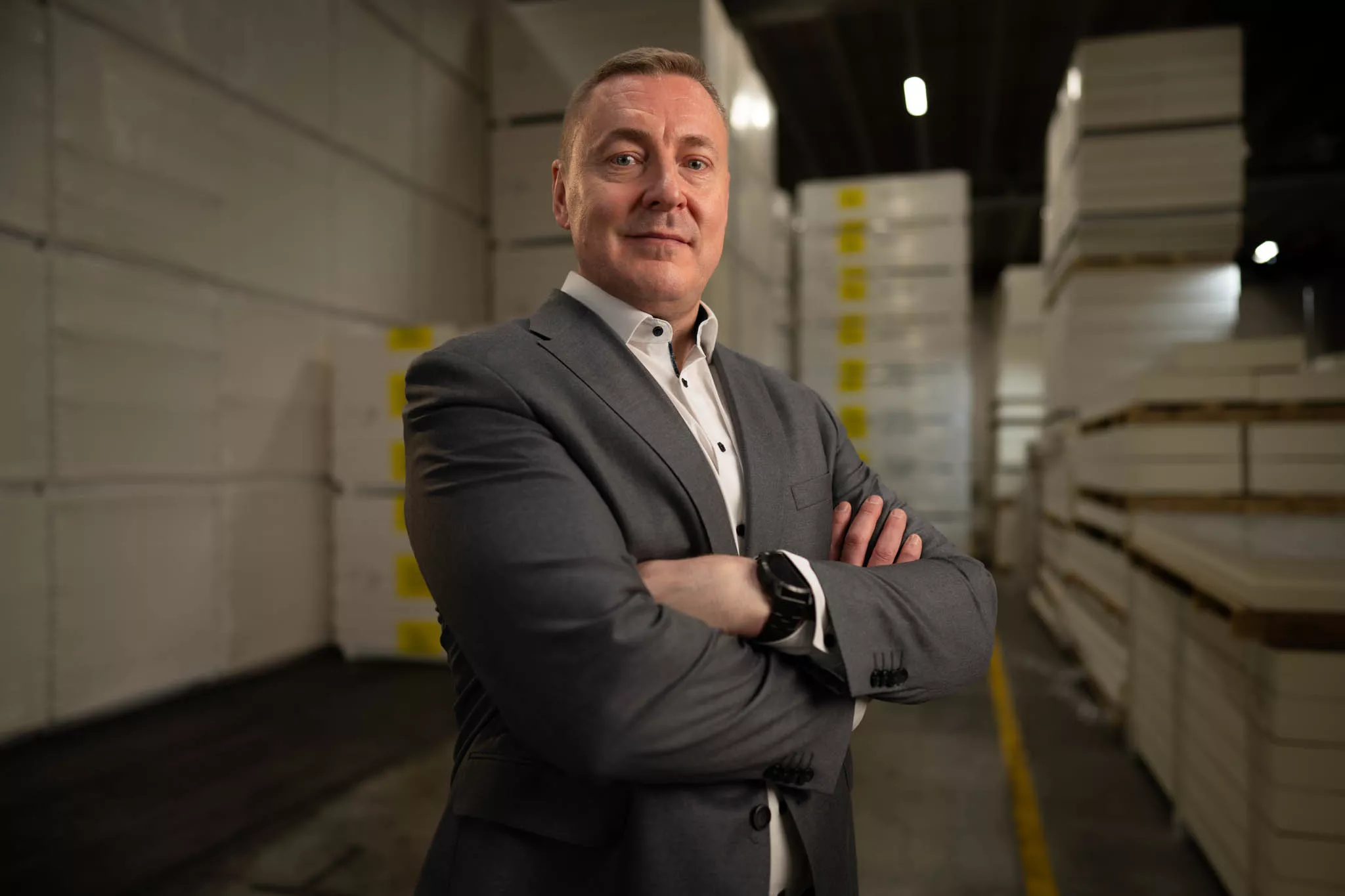
We spoke with Ari Tanni, Commercial Director Nordics at Recticel Insulation, about the opportunities driving the market, the demands placed on modern roof systems and why proven performance remains essential to winning projects.
Why are the Nordics attracting so much investment?
"There are three main reasons," Ari explains. "The first is energy. The Nordics benefit from a combination of nuclear power and renewable energy sources, which helps provide both competitive electricity prices and security of supply."
Reliability is particularly important for facilities that operate around the clock. At the same time, the region's naturally cooler climate can support data centre cooling strategies, helping improve overall operational efficiency.
"When you combine those factors, the Nordics become a very attractive location for investment."
What do data centre developers look for in a roof system?
While data centres are unique buildings in many ways, Ari believes the fundamentals remain unchanged.
"Energy efficiency is one of the starting points. In Finland, the target roof U-value is 0.09 W/m²K. Different insulation materials can achieve that, but the thickness required varies considerably."
PIR insulation can achieve these performance levels with significantly less thickness than traditional alternatives, creating opportunities to optimise the overall roof build-up. However, thermal performance is only part of the equation.
"These are very large buildings. Roofs need to support technical equipment, maintenance activities and future modifications and regulation. Structural performance, moisture behaviour and long-term durability all matter just as much."
Good insulation also contributes to the stability of the building envelope. In Nordic winters, reducing heat loss through the roof can help minimise snow melt and ice formation, supporting safer and more predictable roof performance.
Why is PIR gaining momentum in the Nordic market?
Mineral wool has traditionally dominated Nordic flat roofing projects, but Ari sees growing interest in PIR insulation as developers look for solutions that combine energy efficiency with practical construction benefits.
"It is not one single characteristic that makes the difference," he explains. "It is the combination of thermal efficiency, compressive strength, moisture performance and ease of installation."
Large roof areas particularly benefit from PIR's dimensional stability and the possibility to use larger board formats, reducing the number of joints and fixings required across the roof.
Airtightness is another consideration: "PIR is a closed-cell material, which helps create airtight roof constructions. The final performance always depends on the complete build-up, but it is generally easier to achieve airtightness with PIR."
How do you address fire safety concerns around PIR?
Fire safety remains one of the most frequently discussed topics in Nordic roofing projects.
"Mineral wool is classified as non-combustible, while PIR is classified as combustible. If you only look at the classification of an individual material, the decision can appear straightforward."
However, Ari believes that approach oversimplifies reality.
"A roof is not a single product. It is a complete system. What matters is how that system performs when tested in real conditions."
For that reason, Recticel focuses on providing evidence through fire tests, measurements and documented project experience.
"We have to demonstrate performance rather than assume people already understand it. Designers, contractors, developers and fire authorities want evidence, and rightly so."
What will define the next generation of data centre projects?
According to Ari, technical performance will remain important, but success will increasingly depend on local expertise and collaboration.
"When I first became involved in data centre roofing projects in 2019, many of the designs were developed outside the Nordic region. Today, while investment decisions may still be made elsewhere, much more of the detailed design work is carried out locally."
That shift reflects the growing complexity of modern data centre construction. Designs must comply with local regulations, account for local construction practices and satisfy increasingly demanding performance requirements.
"As a result, technical expertise within the Nordic market is becoming more important than ever. The earlier project teams engage with manufacturers and technical specialists, the more opportunities there are to optimise the design and avoid challenges later in the process."
For Ari, that evolution is a positive sign.
"Data centre investment in the Nordics continues to grow, but projects are no longer simply imported and delivered. Local knowledge, collaboration and technical expertise are playing a bigger role in shaping the final solutions."